
Claude for Teachers 2026: Who Gets It and What It Does
Quick answer: Claude for Teachers is Anthropic’s 2026 education offer for verified US K-12 educators. It gives eligible teachers free access to premium Claude capabilities, teaching-focused skills, curriculum connections, and privacy commitments aimed at classroom use.
This is not just another chatbot discount. Anthropic is positioning Claude as a planning, feedback, and classroom operations assistant. The useful question for schools is whether it can save teacher time without weakening instructional judgment, student privacy, or curriculum quality.
Key takeaways
- Anthropic announced Claude for Teachers on July 14, 2026.
- Verified US K-12 educators can get free access to premium Claude capabilities.
- The offer connects Claude to evidence-based curricula, state standards, and classroom tools.
- Anthropic says educator data is not used for model training and offers a K-12 data privacy agreement.
- Teachers need to sign up by June 30, 2027 to receive a full year of access.
Claude for Teachers at a glance
| Area | What is included | Why it matters |
|---|---|---|
| Access | Free premium Claude for verified US K-12 educators. | Teachers can test advanced AI without personal subscription costs. |
| Curriculum | Connections to Learning Commons, OpenSciEd, Illustrative Math, and standards. | Prompts can stay closer to real classroom materials. |
| Privacy | Anthropic says data is not used for model training. | Districts still need review, but the baseline promise is stronger. |

What teachers can actually use it for
The strongest use cases are repetitive but judgment-heavy tasks. A teacher can ask Claude to turn a standard into a lesson outline, adapt a reading for different levels, create feedback comments, draft family communication, or summarize patterns from classroom data. Anthropic also points to Claude Code and Cowork for more technical workflows, such as analyzing class data or scheduling repeated tasks.
Used well, that makes Claude a preparation assistant rather than a replacement for a teacher. The human still decides what fits the class, what needs cultural context, and where a student needs more than generated feedback.
Why the education angle is different
Most AI tools can write a worksheet. Fewer are connected to curriculum sources and school privacy expectations. Anthropic’s announcement names curriculum and classroom partners including Learning Commons, OpenSciEd, and Illustrative Mathematics. That does not guarantee perfect outputs, but it gives teachers a better starting point than generic prompts.
If you are comparing Claude against broader AI assistants, see our Claude vs ChatGPT 2026 comparison and our ChatGPT alternatives guide.
What schools should check before adopting it
Districts should still review access rules, student data handling, acceptable-use policies, and whether outputs are aligned with local curriculum. Teachers should avoid uploading sensitive student information unless the school has approved the workflow. AI can speed up drafting, but it should not silently decide accommodations, grades, or interventions.
BriefArticle recommendation
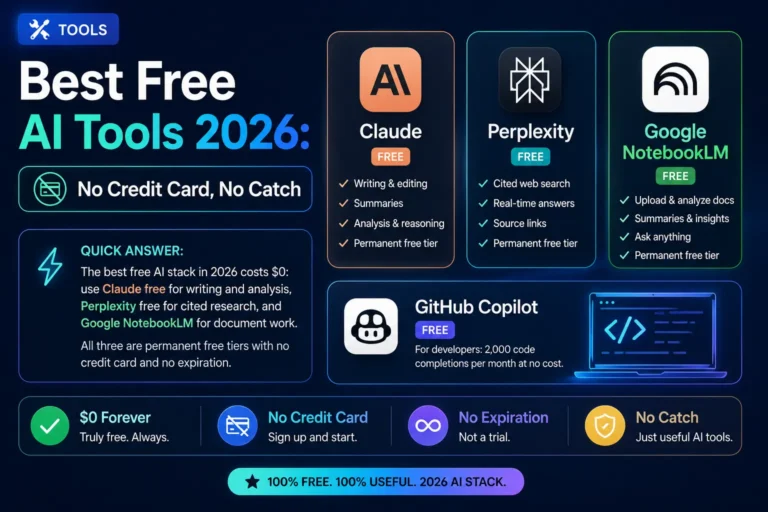
Claude for Teachers is worth testing if the goal is practical time savings: lesson preparation, differentiation, rubrics, parent communication, and analysis of non-sensitive classroom trends. For a broader tool stack, pair this with our best free AI tools 2026 list and the AI tools 2026 complete guide.
Sources
FAQ
Is Claude for Teachers available to all educators?
Anthropic describes the offer for verified US K-12 educators. Eligibility and verification details should be checked on Anthropic’s official page.
Can Claude grade student work automatically?
It can help draft feedback and rubrics, but schools should keep grading decisions under human educator control.