Perplexity vs ChatGPT 2026: Best AI Search Engine Tested
Perplexity vs ChatGPT 2026
Perplexity is the better AI search engine for research in 2026 — it achieves 92% factual accuracy on real-time queries versus ChatGPT’s 87%, and cites every source inline. ChatGPT Plus wins on breadth: image generation, voice mode, agentic coding, and Sora video are all exclusive to OpenAI’s platform at the shared $20/month price point. Use Perplexity to find and verify facts; use ChatGPT to create and build.
Key takeaways
- Perplexity scored 92% factual accuracy on real-time queries versus ChatGPT’s 87% in independent benchmarks, with a citation error rate nearly half that of ChatGPT Search.
- Both Perplexity Pro and ChatGPT Plus cost $20 per month, but deliver entirely different value: Perplexity gives you better search; ChatGPT gives you a wider creative toolkit.
- ChatGPT has 900 million weekly active users and $2 billion per month in revenue. Perplexity has 100 million monthly active users and roughly $450 million ARR.
- ChatGPT Go launched globally in January 2026 at $8 per month, but it includes ads, just like the free tier. Most professionals should skip directly to Plus at $20.
- Perplexity faces a copyright lawsuit from The New York Times, filed in December 2025, over alleged unauthorized content use in AI responses.
OpenAI raised $110 billion in early 2026 and has 900 million people using ChatGPT every week. Perplexity, a company most people had never heard of three years ago, now has 100 million monthly active users and a growing reputation as the search engine researchers actually trust.
The reason both tools exist is because they solve different problems. Perplexity was built from the ground up as a retrieval-first answer engine: real-time web search, inline citations on every response, and a model architecture optimized for factual accuracy. ChatGPT was built as a generation-first conversational AI, and search was added later. That architectural difference explains almost everything else in this comparison.
The verdict is clear: Perplexity wins for research and fact-checking; ChatGPT wins for creative work, coding, and multimedia. Here is exactly why, and which one you should pay $20 a month for.
Quick verdict: Perplexity vs ChatGPT at a glance
The table below covers the six categories that matter most when comparing these two platforms in 2026.
| Category | Perplexity | ChatGPT | Winner |
|---|---|---|---|
| Real-time search accuracy | 92% factual accuracy | 87% factual accuracy | Perplexity |
| Source citations | Inline on every response | Inconsistent; not central to UX | Perplexity |
| Feature breadth | Search, file uploads, multi-model | Search, images, voice, video, code | ChatGPT |
| Creative writing and coding | Capable but not the focus | Industry-leading | ChatGPT |
| Pricing (individual Pro tier) | $20/month | $20/month (Plus) | Tie |
| Free plan quality | ~5 Pro searches/day, no ads | 10 msgs/5 hours, ads in the US | Perplexity |
Data as of May 2026. All prices in USD. Accuracy figures from independent benchmarks published April 2026.
Search accuracy and citations: where the 5-point gap comes from
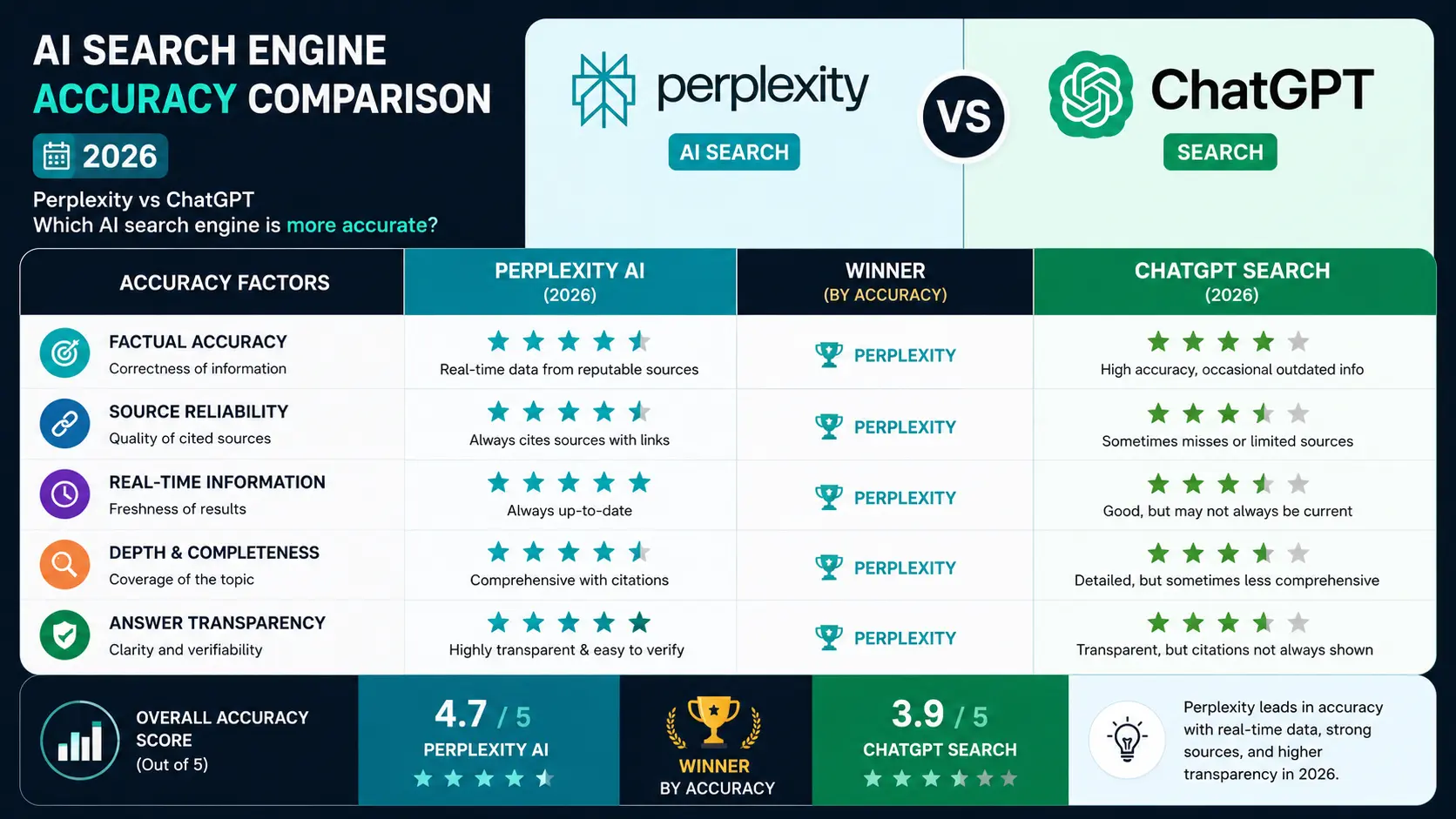
Perplexity’s core architectural advantage is that it was designed to search first and generate second. In independent benchmarks published in April 2026, Perplexity achieved 92% factual accuracy on real-time queries against ChatGPT’s 87%, and its citation error rate came in at nearly half that of ChatGPT Search.
The difference is meaningful in practice. Every Perplexity response includes inline citations linking directly to original sources. You can verify any claim in a single click. ChatGPT can provide source links when web search is enabled, but citations are not consistently inline and are not central to the interface design. For journalists, analysts, researchers, and anyone whose work depends on verifiable claims, that gap matters.
Perplexity maintains a real-time web index of more than 50 billion pages. Its search is on by default, always. ChatGPT does not search the web unless you explicitly enable it, which means its default responses draw from training data with a knowledge cutoff. If you ask ChatGPT about something that happened last month without toggling web search, you may get an outdated or hallucinated answer.
One caveat to keep in mind: Perplexity faces a copyright lawsuit from The New York Times, filed in December 2025 in the Southern District of New York. The Times alleges that Perplexity unlawfully scrapes its articles to formulate user responses. The case is ongoing, and the outcome could affect how Perplexity handles publisher content.
Feature set: what you actually get beyond search
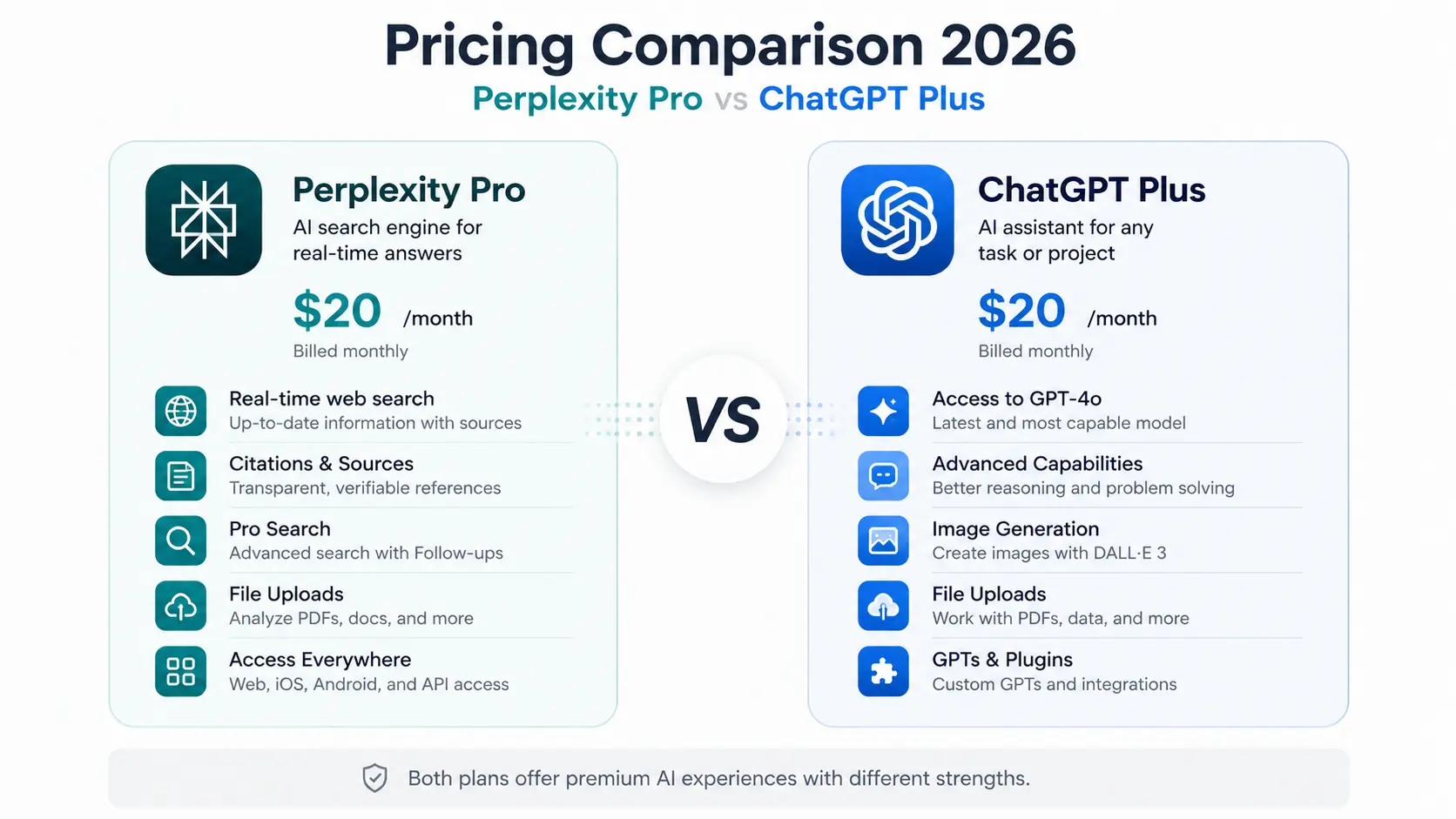
Perplexity’s feature advantages are concentrated in the research workflow. ChatGPT’s advantages are broader and more creative.
Where Perplexity leads
Perplexity Pro gives you multi-model access in a single interface. You can switch between GPT-5-class models, Claude, and others depending on the task. That flexibility is genuinely useful if you want to compare outputs or use the best model for a specific job without managing multiple subscriptions. Perplexity’s Deep Research mode produces multi-source, citation-backed reports on complex topics. It also launched Comet, its AI-powered browser, as a free product in March 2026 with a $5/month Comet Plus tier for premium publisher content access.
Where ChatGPT leads
ChatGPT Plus at $20 per month includes features Perplexity simply does not have: Sora video generation, ChatGPT Images 2.0 with Thinking Mode, Advanced Voice, Codex for agentic coding, and Agent Mode with unlimited messages. GPT-5.5 became the default Plus model on April 23, 2026, and its reasoning capabilities on complex coding and multi-step problems remain ahead of what Perplexity offers natively. For US professionals using Microsoft Teams or SharePoint, ChatGPT Enterprise also integrates directly into the M365 ecosystem, something Perplexity cannot match at the same depth.
A note on ChatGPT ads
As of February 9, 2026, OpenAI introduced advertising on the Free and Go tiers in the United States. If you are on ChatGPT Free or Go at $8 per month, you are seeing sponsored content below responses. Perplexity’s free tier does not include ads. That alone is worth considering if you are deciding whether to pay or use the free version.
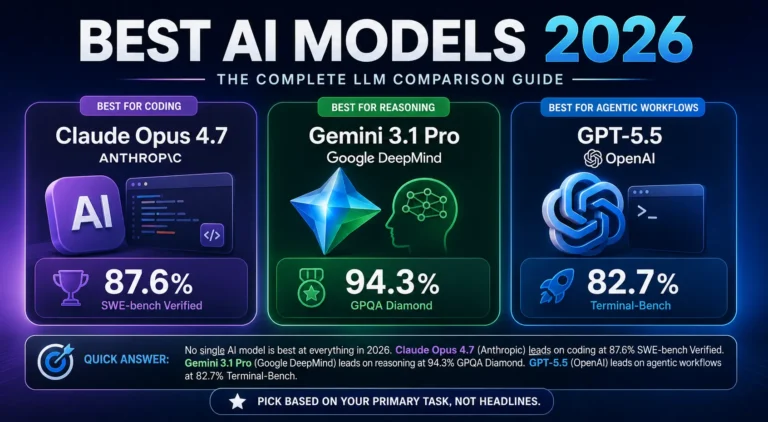
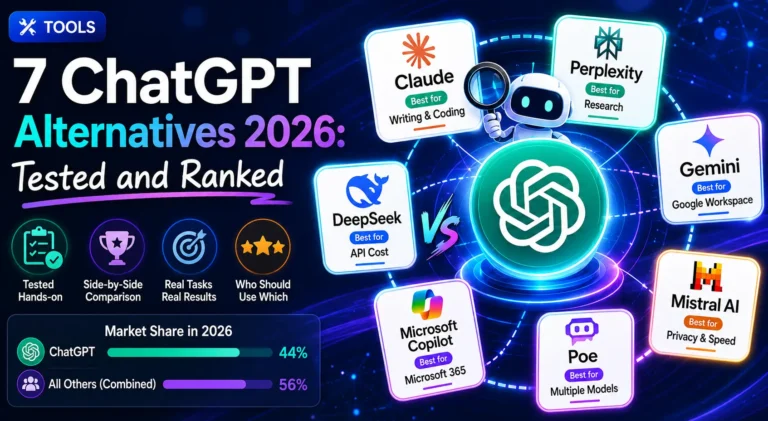
For a broader comparison of leading AI platforms including Claude, Gemini, and Grok, see our complete LLM comparison guide for 2026.
Pricing: what $20 per month buys on each platform
At the standard Pro tier, both services cost exactly the same. The question is what that $20 buys you.
| Plan | Perplexity | ChatGPT |
|---|---|---|
| Free | ~5 Pro searches/day, basic models, no ads | 10 msgs/5 hrs on GPT-5.3, ads in US |
| Entry paid ($8/mo) | Not available at this tier | ChatGPT Go: more volume, but still includes ads |
| Pro / Plus ($20/mo) | Unlimited Pro searches, multi-model access (GPT-5 class, Claude), Deep Research, file uploads, image/video generation, Comet Plus included | GPT-5.5, Deep Research (10 runs/mo), Sora, Images 2.0, Codex, Agent Mode, Advanced Voice, no ads |
| Premium ($100–$200/mo) | Perplexity Max at $200/mo: unlimited Labs, full model suite, early access | ChatGPT Pro $100/mo (launched Apr 9): GPT-5.5 Pro, 5x Plus limits; Pro $200/mo: 20x limits, 250 Deep Research runs |
| Teams / Enterprise | Enterprise Pro at $40/user/mo with shared Spaces, SSO, compliance | ChatGPT Business at $20/user/mo (annual) with M365 integrations, SSO, SOC 2 |
Pricing as of May 2026. All prices in USD. ChatGPT Business dropped from $25 to $20/user/month on April 2, 2026.
The pricing verdict: at $20 per month, you get better research tools from Perplexity and a broader creative suite from ChatGPT. Neither is objectively better value. The right choice depends entirely on your primary use case. At the enterprise level, ChatGPT Business undercuts Perplexity Enterprise Pro by $20 per seat per month and offers deeper Microsoft ecosystem integration.
Who should use Perplexity vs ChatGPT in 2026
Researchers, journalists, and analysts
Use Perplexity Pro. The 92% real-time accuracy, inline citations, and Deep Research mode make it the strongest AI tool for verifiable information gathering. The multi-model access at the same $20 price point is a bonus that ChatGPT does not match at that tier.
Developers, engineers, and technical professionals
Use ChatGPT Plus for most coding work. GPT-5.5’s reasoning on multi-step technical problems, combined with Codex and Agent Mode, gives it a clear edge for software development workflows. Perplexity is still useful for quickly looking up documentation, library versions, or recent GitHub activity.
Writers, marketers, and content creators
Use ChatGPT Plus for creation and Perplexity free for research. ChatGPT’s GPT-5.5, Sora, and Images 2.0 cover the full content creation stack. Perplexity’s free tier is often enough for background research, leaving the $20 budget free for a ChatGPT subscription. If your work requires heavy sourcing, upgrade Perplexity to Pro and consider using both.
Students and casual users
Perplexity’s free tier is the better free product in 2026. It delivers cited, real-time answers with no ads, no hard message wall, and no quality degradation. ChatGPT Free is useful but limited to 10 messages every five hours, falls back to a lighter model after that limit, and now includes advertising in the US.
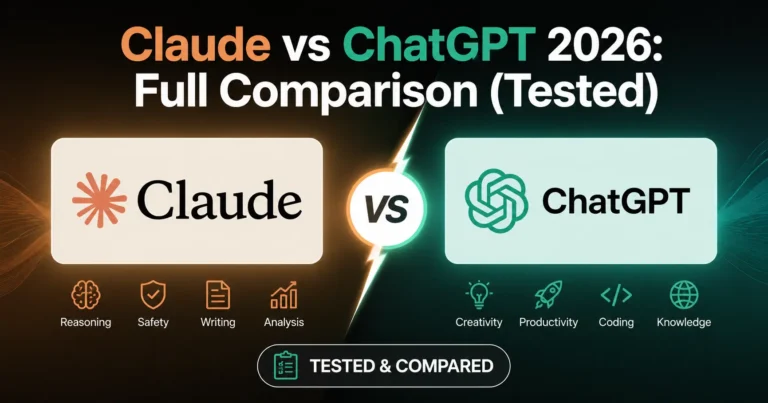
For a head-to-head look at Claude against ChatGPT, see our Claude vs ChatGPT 2026 comparison. For a Gemini deep-dive, see Gemini vs GPT-5 in 2026.
Frequently asked questions
Is Perplexity better than ChatGPT in 2026?
Perplexity is better than ChatGPT for research, fact-checking, and tasks that require real-time, cited information. Independent benchmarks show Perplexity achieves 92% factual accuracy on real-time queries versus ChatGPT’s 87%. ChatGPT is better for creative writing, coding, image generation, and voice interaction.
Is Perplexity AI free to use?
Yes, Perplexity AI has a free plan that includes basic search with source citations. Free users are limited to approximately 5 Pro Search queries per day and cannot access advanced AI models. The paid Pro plan costs $20 per month and removes those limits.
What is the difference between Perplexity and ChatGPT?
The fundamental difference is architecture. Perplexity is a retrieval-first answer engine built around real-time web search with inline citations on every response. ChatGPT is a generation-first conversational AI with a much wider feature set including image generation, voice mode, and agentic coding, but it does not search the web by default unless you enable that option.
Does Perplexity Pro cost the same as ChatGPT Plus?
Yes. Both Perplexity Pro and ChatGPT Plus cost $20 per month as of May 2026. They deliver different value at that price: Perplexity gives you deeper research with source citations and multi-model access, while ChatGPT gives you Sora video generation, Advanced Voice mode, and a broader tool ecosystem.
Can Perplexity replace Google Search?
For research and synthesized information, Perplexity is often faster and more useful than Google Search because it combines results from multiple sources into a single cited answer. For tasks requiring raw link browsing, local business discovery, or highly visual queries, Google still has the advantage in 2026.
Final verdict
Perplexity is the better AI search engine in 2026. It is more accurate on real-time queries, cites every source, and delivers research-grade answers that ChatGPT’s default mode cannot match. If your primary use case is finding, verifying, and synthesizing information, Perplexity Pro at $20 per month is the right buy.
ChatGPT Plus wins on everything else. Sora, GPT-5.5, Codex, Agent Mode, and Advanced Voice make it the more powerful all-around platform for US professionals who need a tool that does more than search. At $20 per month, it is the better choice for creators, developers, and business users who need a full-stack AI assistant.
The smartest setup for serious users is both: use Perplexity free or Pro for research and fact-checking, then bring verified information into ChatGPT to draft, build, or create. That workflow outperforms either tool alone.
Get the daily AI brief
Delivered at 7:30 AM EST, Monday to Friday. The signal without the noise. Free. No fluff. Unsubscribe anytime.
Part of the LLM Comparisons series
This is part of our complete LLM comparison guide for 2026: